
Section 189 Explained: The Retrenchment Consultation Process
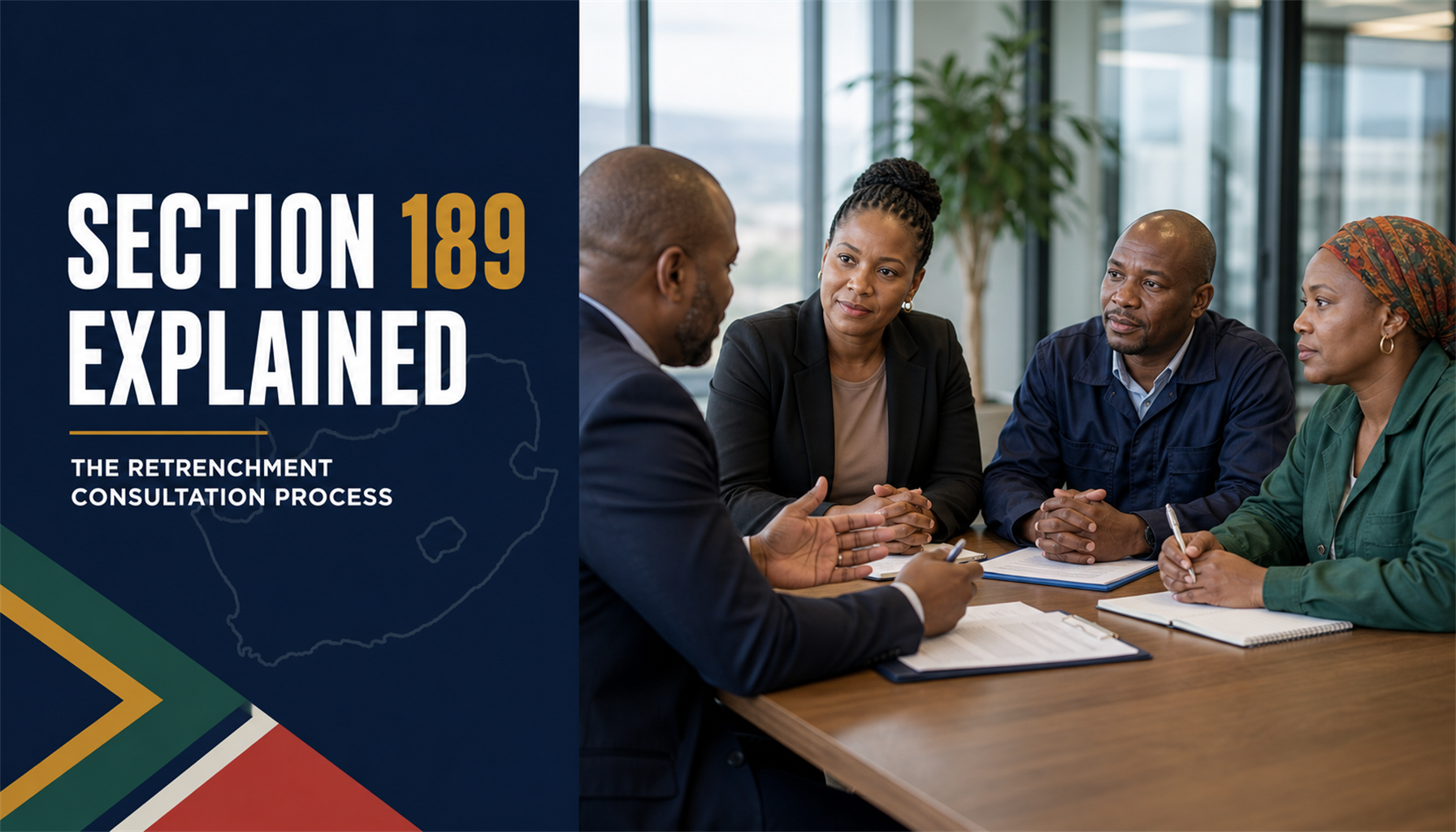
When a South African business needs to retrench for operational reasons, the law sets out a consultation process that must be followed before anyone is let go. This process — found in section 189 of the Labour Relations Act — is where most retrenchment disputes are won or lost. Getting it right protects both your employees and your business.
What section 189 is, in plain terms
Section 189 requires an employer who is contemplating retrenchment to consult — properly and in good faith — before making a final decision. The key word is contemplating: the consultation has to happen while the outcome is still genuinely open, not after the decision is already made and dressed up as a formality.
Who you must consult
You must consult the right people, which (depending on your workplace) may be a workplace forum, a registered trade union, or the affected employees themselves. Consulting the wrong party, or skipping consultation altogether, is a common and serious mistake.
What the consultation must cover
A proper consultation attempts to reach agreement on things like:
- Ways to avoid the retrenchments or reduce the number.
- Timing — how and when any retrenchments would happen.
- Softening the impact — for example, support or alternatives.
- Selection criteria — how it will be decided who is affected.
- Severance pay.
You also need to disclose relevant information in writing so the consultation can be meaningful — people can’t engage properly if they’re kept in the dark.
Fair selection criteria
Where you have to choose who is affected, the criteria must be fair and objective — agreed with the other party, or otherwise fair and consistent (for example “last in, first out,” skills, or similar). Subjective or inconsistent selection is a frequent point of challenge.
Why good faith matters so much
The whole process turns on good faith. A consultation that’s genuinely open, properly documented, and fair is defensible. One that’s a rubber-stamp exercise after the decision is already made is exactly what gets overturned at the CCMA or the Labour Court.
Frequently asked questions
Does section 189 apply to small businesses? The consultation duty applies broadly; larger retrenchments carry additional procedural requirements. Get advice on what applies to your headcount and situation.
How long does the consultation take? Long enough to be meaningful. There’s no single fixed period for smaller retrenchments, but rushing it undermines fairness.
What if we can’t reach agreement? You don’t have to reach agreement, but you must genuinely consult and consider the input before deciding. The attempt has to be real.
Run a retrenchment that holds up
The consultation process is detailed and easy to get wrong. Book a consultation, read the retrenchment process step by step, or see our restructures and retrenchment service.