
Retrenchment is one of the hardest things a business has to do, and one of the most legally exposed. When the reasons are financial, emotions run high — and any employee who believes the process was unfair can take it to the CCMA. Knowing the retrenchment process before you start is how you keep a restructure both commercially sound and legally defensible.
When is retrenchment lawful?
Retrenchment — dismissal for “operational requirements” — is lawful when there’s a genuine economic, technological, structural or similar business need. The reason must be real, not a disguised way of removing a particular employee. As with any dismissal, both substantive fairness (a genuine reason) and procedural fairness (a proper process) must be present.
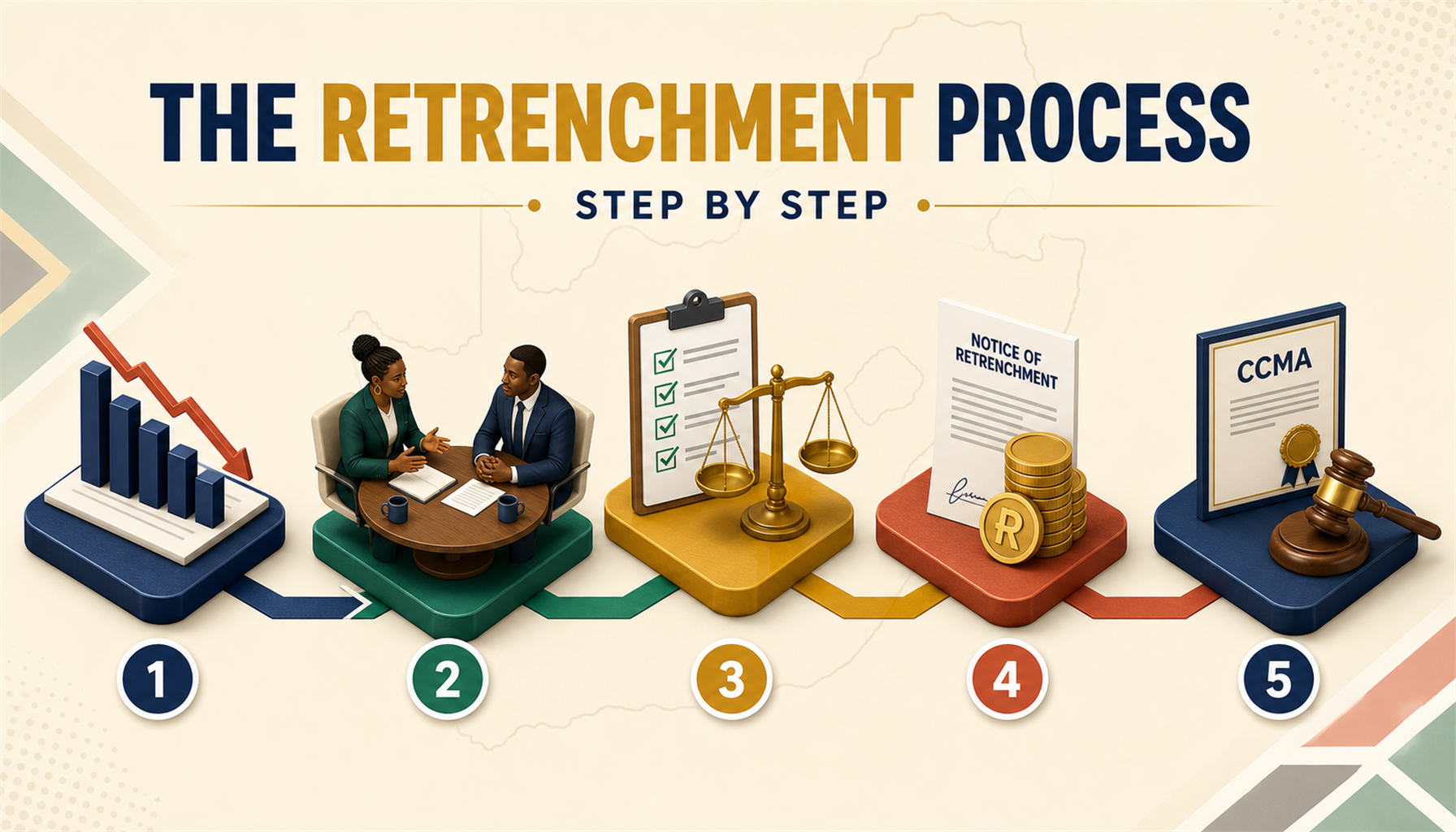
Step 1: Identify the operational requirement
Be clear and honest about the commercial driver — falling revenue, restructuring, automation, closure of a function. This rationale underpins everything that follows and will be tested if challenged.
Step 2: Consult
Consultation is the heart of a fair retrenchment. You must consult affected employees (or their representatives) meaningfully and in good faith, covering ways to avoid or minimise retrenchments, the timing, severance, and selection. Consultation must be genuine — not a box-ticking exercise after the decision is already made.
Step 3: Apply fair selection criteria
Where you must choose who goes, use objective, fair and consistent criteria (for example LIFO — last in, first out — skills, or other defensible measures) agreed or properly justified. Subjective or inconsistent selection is a common point of failure.
Step 4: Notice and severance
Give proper notice and pay severance in line with the law and any applicable agreement. Get the figures and process right — errors here add avoidable risk.
Step 5: Be ready for the CCMA
A retrenched employee can refer a dispute if they believe the process was unfair. A well-documented, genuinely consultative process is your best defence.
Why getting it right matters
The legal and financial consequences of an incorrectly run retrenchment can be a serious burden — compensation, reinstatement, and the cost of fighting a dispute. Doing it correctly the first time is far cheaper than defending a flawed process afterwards.
Frequently asked questions
How many employees trigger a “large-scale” retrenchment? Larger retrenchments carry additional procedural requirements. The thresholds and exact procedure depend on your headcount and circumstances — get specific advice before you start.
Can employees refuse a retrenchment? They can’t veto a genuine operational decision, but they can challenge the fairness of the reason or process at the CCMA, which is why consultation and documentation matter.
How early should we get advice? As early as possible — ideally before any consultation begins — so the process is structured correctly from day one.
Restructure with confidence
Explore our restructure and retrenchment service, understand the CCMA process, or book a consultation.