
If conciliation hasn’t settled a dispute, the next step at the CCMA is arbitration — a formal hearing where both sides give evidence and a commissioner makes a binding decision. For employers, the result often comes down to one thing: preparation. Walking in unprepared is the single biggest reason employers lose cases they should have won. Here’s how to get ready.
Understand what arbitration is
Arbitration is not a chat — it’s an evidence-led hearing. Both sides present their case, call witnesses, and are questioned. The commissioner then issues a binding award. Because it’s binding and hard to overturn, arbitration is the place to get it right.
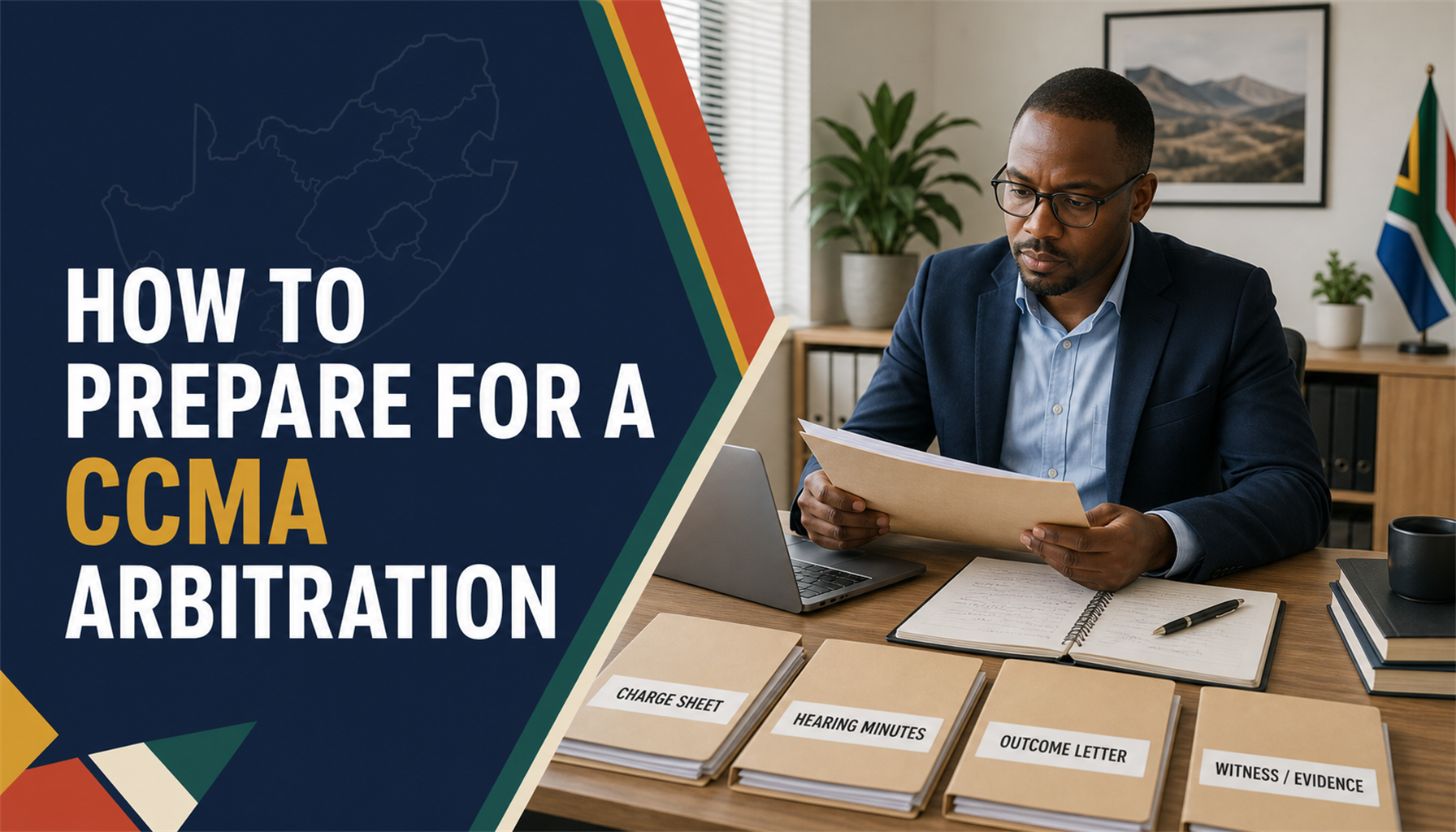
Get your documents in order
Your paperwork tells the story. Pull together and organise:
- The charge sheet and notice of hearing.
- The minutes or record of the disciplinary hearing.
- The outcome letter.
- Any policies, contracts or warnings that are relevant.
- The evidence that supports your case.
Missing or disorganised documents make even a strong case look weak.
Prepare your witnesses
Identify who actually saw or can speak to what happened, and make sure they’re available and ready. A witness who knows the facts and can explain them clearly is worth far more than a stack of paper. Prepare them for the fact that they’ll be questioned by the other side.
Be honest about your weak points
Every case has them. The time to find yours is before the hearing — not when the other side raises them. Knowing where you’re vulnerable lets you address it head-on rather than being caught out.
Know what you’re trying to prove
For a misconduct dismissal, broadly you need to show there was a rule, the employee broke it, the rule was reasonable and known, it was applied consistently, and dismissal was an appropriate sanction — and that the process was fair. Build your evidence around exactly those points.
Consider representation
You’re not obliged to have representation, but an experienced representative knows how to present evidence, question witnesses and argue the law — and that often decides close cases.
Frequently asked questions
What happens on the day? Both sides present evidence and witnesses to a commissioner, who runs the hearing and later issues a binding award.
Can we still settle at arbitration? Sometimes matters settle even at this late stage, but you should prepare as if it will run fully.
What if we lose? An adverse award can order compensation or reinstatement. Awards can be reviewed by the Labour Court only in limited circumstances, so the realistic place to win is the arbitration itself.
Walk in prepared, not hopeful
We prepare and represent employers at the CCMA. Book a consultation, read the CCMA process explained, or see our CCMA representation service.