
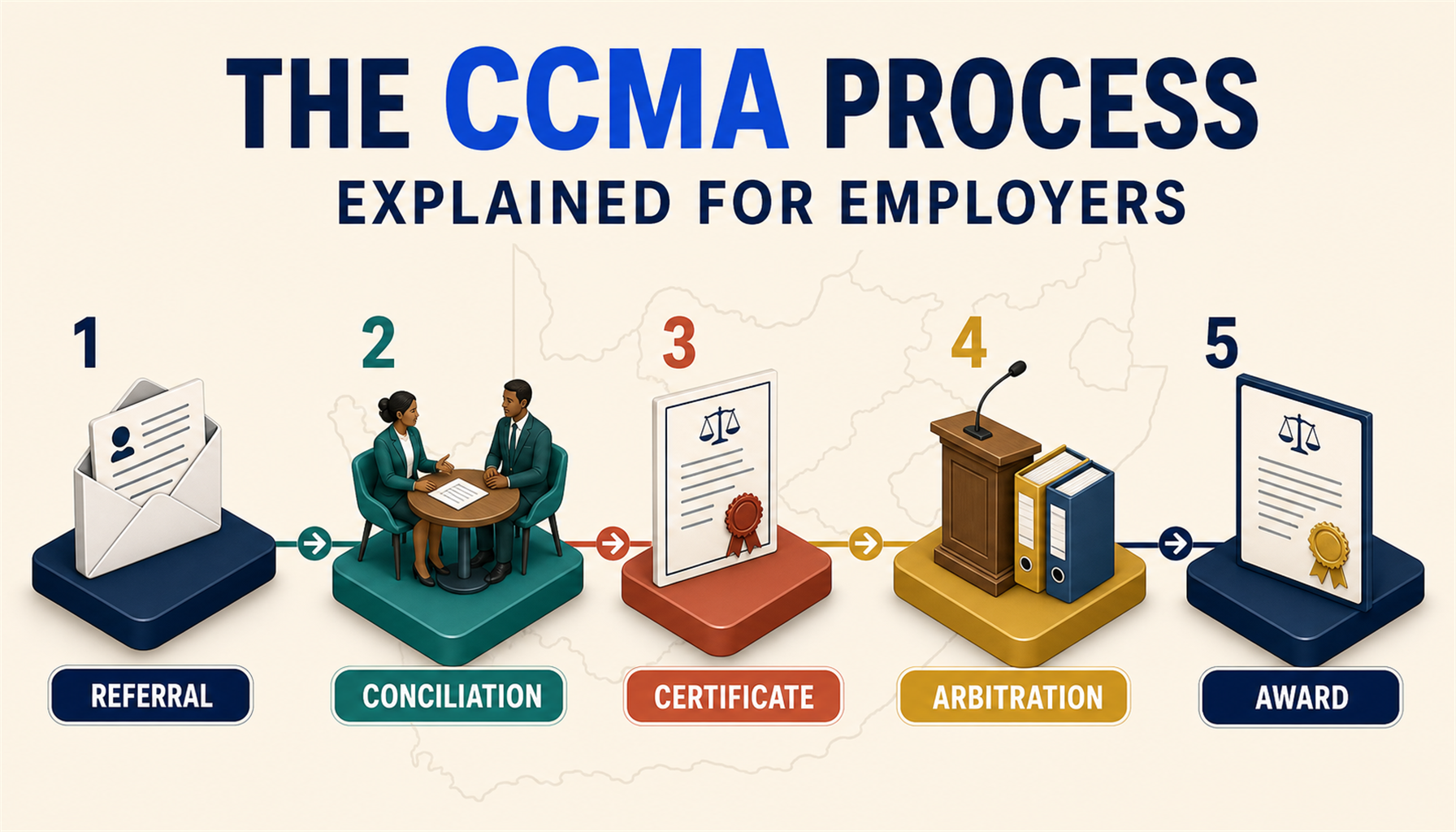
For many South African employers, a letter from the CCMA is the first sign that a dismissal is being challenged — and the start of a process that can end in compensation or reinstatement if it’s mishandled. Understanding the CCMA process before you’re in it is the best way to protect your business. Here’s how it works, step by step.
What is the CCMA?
The Commission for Conciliation, Mediation and Arbitration (CCMA) is South Africa’s statutory body for resolving labour disputes. The majority of its cases are unfair-dismissal disputes, but it also deals with unfair labour practices and other matters. For employers, it’s where the fairness of your disciplinary, incapacity or retrenchment process gets tested.
Step 1: Referral
A dismissed employee refers the dispute to the CCMA, generally within 30 days of the dismissal. A later referral requires the employee to apply for condonation, which isn’t automatic. You’ll be notified of the referral and the date set for conciliation.
Step 2: Conciliation
Conciliation is an informal, without-prejudice meeting where a commissioner tries to help the parties settle. There are no winners or losers at this stage — it’s a chance to resolve the matter without a formal hearing. Many disputes end here, either by settlement or because the parties can’t agree.
Step 3: Certificate of outcome
If conciliation doesn’t resolve the dispute, the commissioner issues a certificate confirming the matter is unresolved. This opens the door to arbitration.
Step 4: Arbitration
Arbitration is the formal hearing. Both sides lead evidence, call witnesses and make arguments, and the commissioner issues a binding award. This is where preparation counts most: the strength of your charges, your evidence, and the fairness of your original process all come under the microscope.
Step 5: The award
The commissioner’s award is binding. If it goes against you, it can order compensation (often up to a number of months’ pay) or reinstatement. Awards can be taken on review to the Labour Court only in limited circumstances — so the realistic place to win is at arbitration itself.
How to prepare
- Get your paperwork in order: the charge sheet, notice of hearing, minutes and outcome letter.
- Line up your witnesses and make sure they’re ready to give evidence.
- Be honest about weak points in your process before the other side finds them.
- Consider representation: an experienced representative can be the difference at arbitration.
Frequently asked questions
How long do we have before the CCMA hearing? The CCMA sets the dates. Conciliation is usually scheduled within weeks of referral; arbitration follows if conciliation fails.
Can we settle at conciliation? Yes — many matters settle there, which can be cheaper and more certain than arbitration.
Do we need representation at the CCMA? You’re not obliged to have it, but employers who go in unprepared often lose on procedure. Specialist help materially improves your position.
Facing a CCMA matter?
Read more about our CCMA representation service, make sure your disciplinary process is defensible, or book a consultation.