
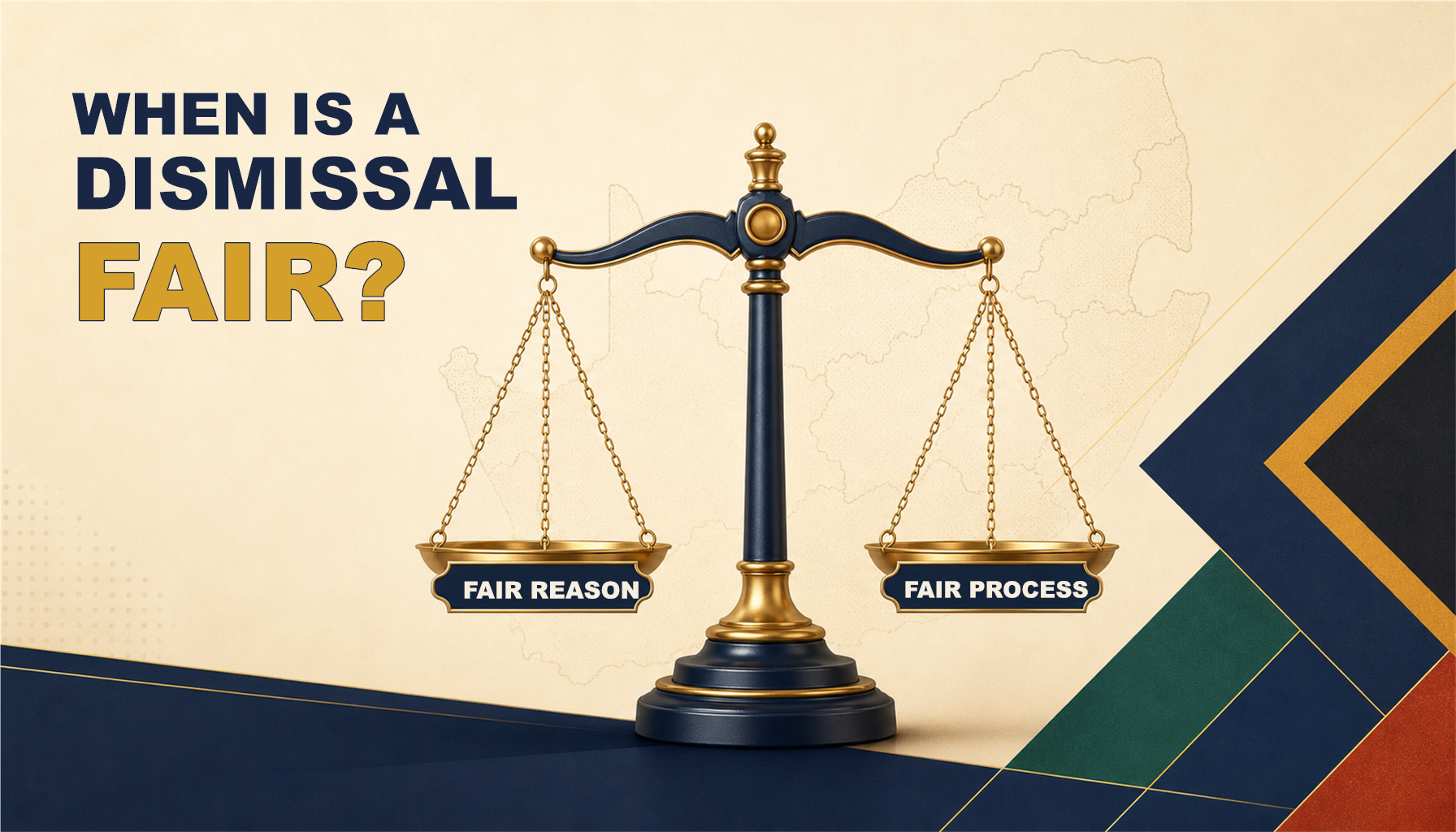
For South African employers, knowing when a dismissal is fair is the difference between parting ways cleanly and facing a costly claim at the CCMA. The law sets a clear test, and it is stricter than many business owners expect: a fair dismissal needs both a good enough reason and a fair process. Miss either one, and the dismissal can be found unfair — even if the employee was genuinely in the wrong.
The two halves of a fair dismissal
South African labour law splits fairness into two parts, and you need both:
- A fair reason (substantive fairness). There must be a valid, recognised reason to dismiss.
- A fair process (procedural fairness). You must follow a proper, fair procedure before you do.
A watertight reason with a sloppy process is still an unfair dismissal. So is a perfect process with no real reason. Both halves have to hold.
The three fair reasons to dismiss
South African law recognises three broad grounds for a fair dismissal:
- Misconduct — the employee did something wrong (broke a known, reasonable workplace rule). This is dealt with through a disciplinary process.
- Incapacity — the employee can’t do the job, through ill health or genuine poor performance. This is not about fault, and it calls for a supportive, well-documented process, not punishment.
- Operational requirements (retrenchment) — the business has a genuine economic, structural or similar need to cut roles. This requires proper consultation and fair selection.
Any dismissal that doesn’t fit one of these three is on shaky ground.
What a fair process looks like
The exact steps depend on the reason, but the principles are consistent: the employee should know what the issue is, get a genuine chance to respond, and have the decision taken fairly and consistently. For misconduct that usually means a disciplinary hearing; for incapacity, a documented consultation process; for retrenchment, meaningful consultation before any final decision.
Why “he clearly deserved it” isn’t enough
This is the trap that catches employers most often. You can be completely right that an employee deserved to go — but if you skipped the process, the CCMA can still find the dismissal unfair and order compensation or reinstatement. Being right about the reason does not excuse getting the process wrong.
Frequently asked questions
Can I dismiss someone on the spot for serious misconduct? Even for serious misconduct, a fair process is still required before dismissal. “Summary” dismissal refers to dismissing without notice — not to skipping a fair hearing.
Is a first offence ever enough to dismiss? Yes, for sufficiently serious misconduct (for example gross dishonesty or violence) dismissal can be fair on a first offence — provided the process was fair.
What does the CCMA award if a dismissal is unfair? Typically compensation (often up to a number of months’ pay) or reinstatement, depending on the circumstances.
Make sure your next dismissal is defensible
Don’t leave it to chance. Book a consultation, or learn more about our disciplinary, incapacity and retrenchment services.