
Ill-Health Incapacity vs Poor Performance: An Employer’s Guide
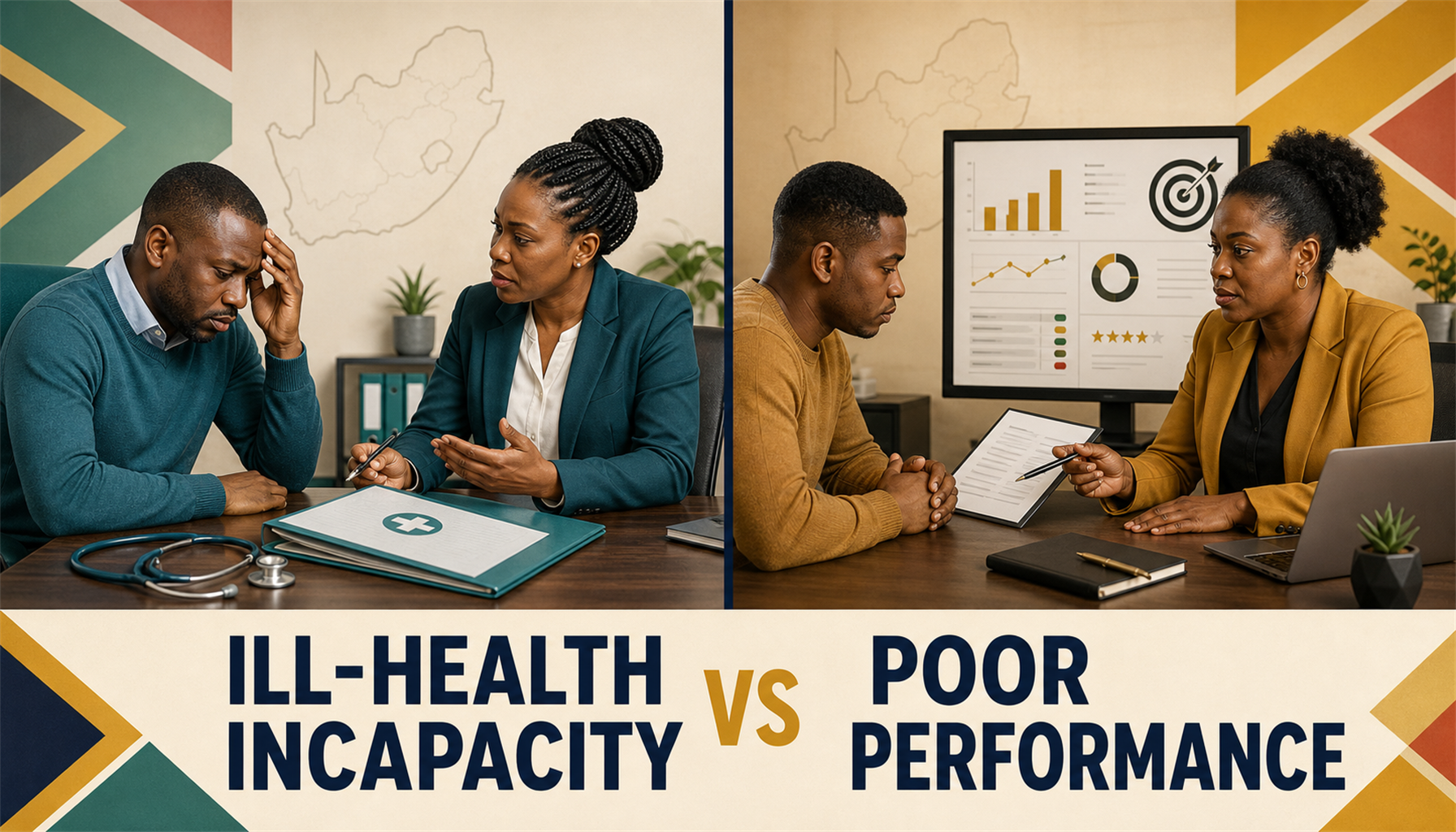
One of the most common and costly mistakes South African employers make is treating an incapacity matter as if it were misconduct. Incapacity is not about fault — it’s about an employee who genuinely cannot do their job, whether through ill health or an inability to meet the required standard. The process is fundamentally different from discipline, and getting it wrong can land you at the CCMA.
Incapacity is not misconduct
Misconduct involves fault — the employee chose to break a rule, and discipline is the response. Incapacity involves an employee who is not at fault but simply cannot perform. Because there’s no wrongdoing, the response is not punishment but a fair, supportive process aimed at finding a workable solution. Confusing the two is where many employers come unstuck.
Ill-health incapacity
Ill-health or injury incapacity arises when an employee’s medical condition prevents them from performing their duties, temporarily or permanently. A fair process requires you to:
- Obtain proper medical evidence about the condition and prognosis.
- Explore reasonable accommodation — adapting duties, hours or the workplace.
- Consider alternative positions the employee could fill.
- Consult with the employee throughout, with everything documented.
Only once those steps are genuinely exhausted does ending employment become a fair option — and even then, with care and a clear record.
Poor-performance incapacity
Poor performance is a different kind of incapacity: the employee is not meeting the required standard. A fair process means:
- Setting clear, reasonable performance standards.
- Telling the employee where they’re falling short.
- Giving real support and a genuine opportunity to improve.
- Only considering dismissal once it’s clear the standard can’t be met.
Why the distinction matters
The gap between the incapacity and misconduct processes is wide. Treat an incapacity matter as misconduct — charging and “disciplining” a sick or struggling employee — and you risk an unfair-dismissal finding, with compensation or reinstatement to follow. Handle it as the law intends, and you protect both your employee’s dignity and your business.
When to use an independent chairperson
For serious or contested incapacity matters, an independent chairperson adds fairness and defensibility — particularly where the decision may lead to dismissal.
Frequently asked questions
Can I dismiss someone for being sick? Only after a fair ill-health process: medical evidence, reasonable accommodation, and exploring alternatives. Dismissal must be a last resort, not a first response.
Is poor performance the same as misconduct? No. Poor performance (where the employee genuinely can’t meet the standard) is an incapacity matter requiring support and an opportunity to improve — not punishment.
What evidence do I need for an ill-health process? Proper medical evidence on the condition and prognosis, plus a documented record of consultation and the alternatives you considered.
Handle incapacity the right way
Learn more about our incapacity hearing service, see how it differs from disciplinary hearings, or book a consultation.