
Chairperson vs Initiator in a Disciplinary Hearing: Who Does What
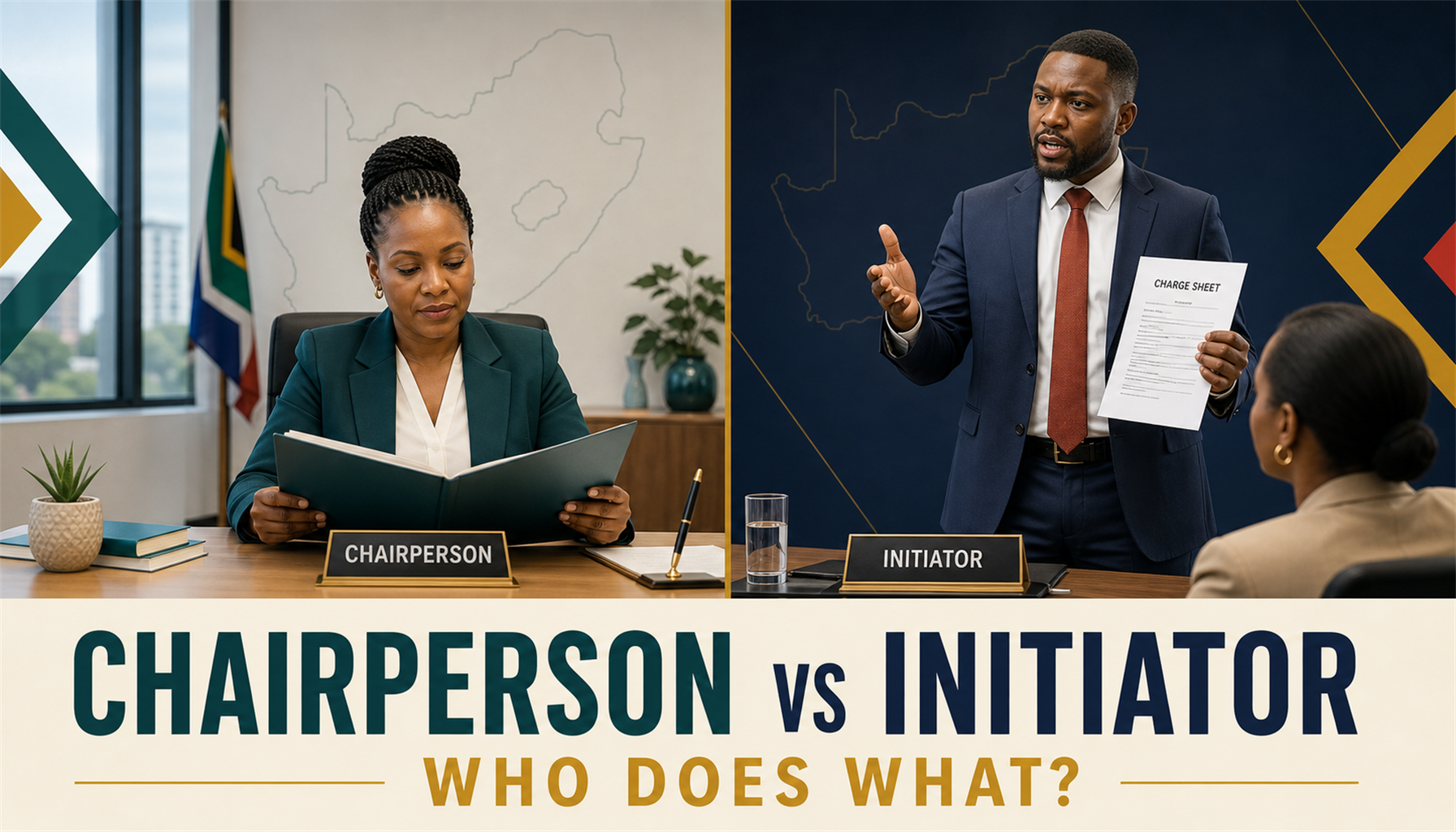
One of the most common reasons disciplinary hearings fall apart is a confusion of roles. When the same person investigates, presents the case and decides the outcome, the hearing looks — and often is — unfair. Understanding the difference between the chairperson and the initiator in a disciplinary hearing is fundamental to running a process that holds up.
The initiator: presenting management’s case
The initiator (sometimes called the “complainant” or “prosecutor”) represents the employer’s side. Their job is to:
- Present the charges against the employee.
- Lead the evidence and call witnesses.
- Cross-examine the employee and their witnesses.
- Argue why the misconduct is proven and why the proposed sanction is appropriate.
The initiator is partisan — they are there to make the employer’s case. That’s their proper role.
The chairperson: deciding impartially
The chairperson runs the hearing and decides the outcome. Their job is to:
- Keep the proceedings fair and orderly.
- Ensure the employee gets a genuine chance to respond.
- Weigh the evidence from both sides without bias.
- Decide whether the misconduct is proven, and if so, what sanction is appropriate.
The chairperson must be impartial — and, just as importantly, must be seen to be impartial.
Why separating the roles matters
If the chairperson also investigated the matter or presented the case, the employee can credibly argue the outcome was a foregone conclusion. That single flaw can render an otherwise valid dismissal procedurally unfair at the CCMA. Separating the initiator and chairperson roles protects the integrity — and the defensibility — of the hearing.
Why an external chairperson helps
In small businesses especially, it can be hard to find an internal chairperson who is both senior enough and genuinely removed from the matter. An independent, external chairperson:
- Removes any suggestion of bias or pre-judgment.
- Brings experience in procedure, evidence and sanction.
- Lets your management focus on presenting the case rather than running the hearing.
Frequently asked questions
Can the same person be chairperson and initiator? No — this is a serious fairness problem. The roles must be separate.
Does the chairperson have to be a manager? Not necessarily. They need to be impartial and competent to run the hearing; an external specialist is often the safest choice for serious matters.
Who decides the sanction? The chairperson, after finding the misconduct proven — taking into account seriousness, the employee’s record and consistency.
Run a hearing that holds up
Learn how the whole process fits together in our guide on how to run a disciplinary hearing, explore our disciplinary hearing chairperson service, or book a consultation